Open Stage
I co-founded and designed a physical-digital service that let artists book and unlock public stages, while helping municipalities activate underused squares.
Context
Originally "Hive" · IoT + Civic Tech + Service Design
Role
Co-founder & Product Designer
Timeframe
2018–2022
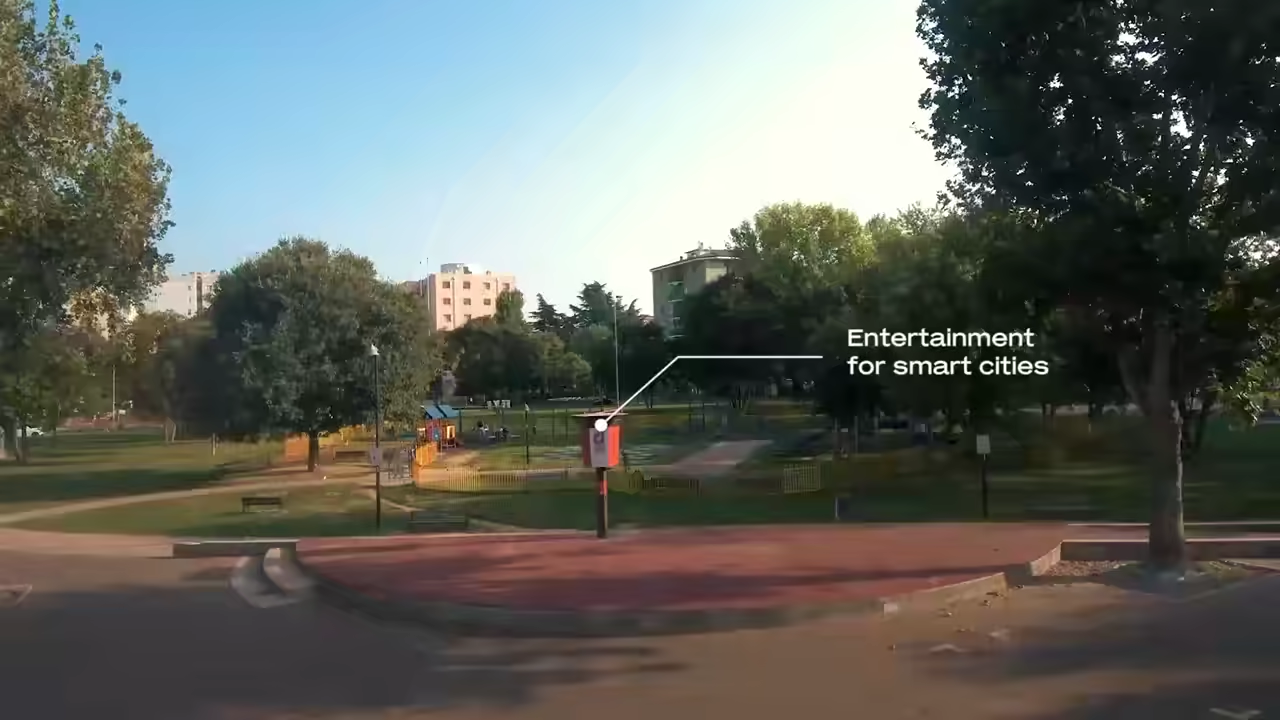
From university project to public-stage service
Open Stage grew out of a university project at ISIA Firenze, developed with Pietro Resta. The brief was to design a physical product with an accompanying digital service.
Coming from a family of artists and musicians, and from the province of Florence—where many public spaces sit underused—I saw art and music as a way to bring those places back to life. That idea became a bookable public stage where artists could perform and audiences could gather. The first concept was called Hive: an equipped, hexagonal stage conceived as part of a shared urban organism. As it moved beyond the university context, it became Open Stage.
How the service worked
Open Stage combined a physical station, an app and a service model. I mapped the actors—artists, audiences, municipalities and delivery partners—and the material, information and economic flows connecting them before, during and after each performance.
Artists could book, unlock and perform in one flow: reserve a slot, open the mixer hatch from their phone, plug in and play. Audiences could discover nearby shows, follow artists and support them directly.
One stage connected the whole service
FIG. OS.01
Stage + app
Book, unlock, plug in and perform
Information + material
Artist
Availability · booking · access · performance
Information + economic
Audience
Discovery · following · live show · donation
Information
Municipality
Authorisation · hours · decibels · public-space rules
Material + information
Delivery partners
Production · installation · maintenance · support
- Information
- Material
- Economic
Text alternative: A service map with Stage and app at the centre. Artists exchange booking and access information with the app and use the physical stage. Audiences discover performances and can donate to artists. Municipalities set operating rules and receive service information. Delivery partners build and maintain the physical station. A legend distinguishes information, material and economic flows.
Two journeys through one public stage
FIG. OS.02
01
For artistsBook, unlock, perform
Artists could choose a slot, arrive at the station and scan its QR code to unlock the equipment and begin performing.

02
For the audienceFind and support local talent
Audiences could discover nearby stages and live shows, open performance details, follow artists and support them directly.

For artists
Text alternative: Two reconstructed app journeys. Artists manage upcoming bookings and unlock the physical station by scanning its QR code. Audience members discover nearby stages on a map, open a place and performance detail, follow artists and support them.
My role across product and rollout
As co-founder and product designer, I worked with Pietro Resta and the founding team across research, service design, the physical product and the app.
I led research with artists and municipalities to understand goals, local regulation and operational constraints, then translated the findings into app flows, station design and rollout decisions. I ran early usability tests to reduce friction for artists less familiar with digital tools and helped move the MVP through certification and safety requirements toward real installations.
Four iterations toward a more flexible public stage
FIG. OS.03
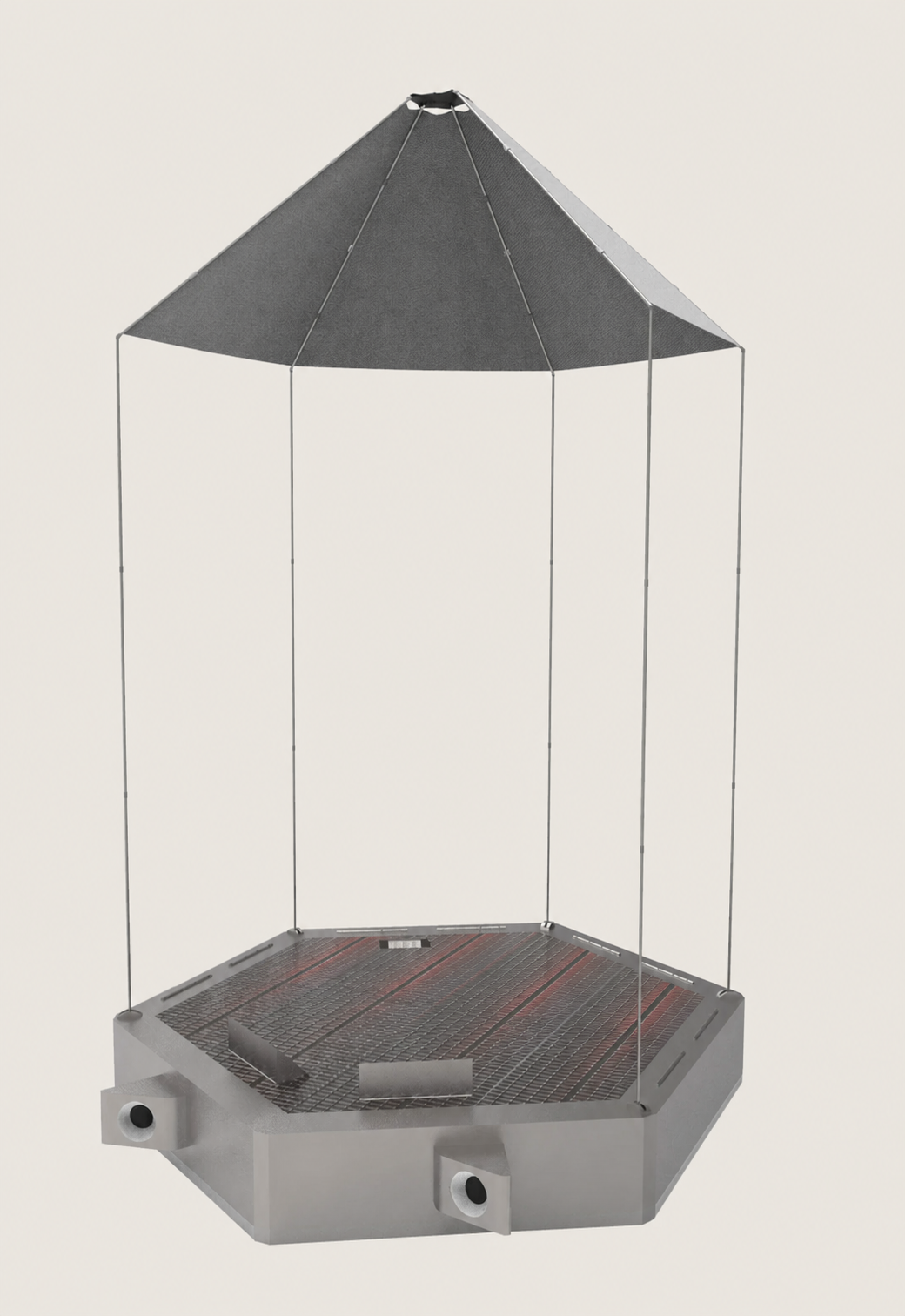
Evolution · 2018 · The Cell
Academic platform
The first concept combined a hexagonal platform with integrated audio, mixer and lighting. A lightweight canopy and photovoltaic floor explored how a stage could remain ready in the square with minimal specialist setup.
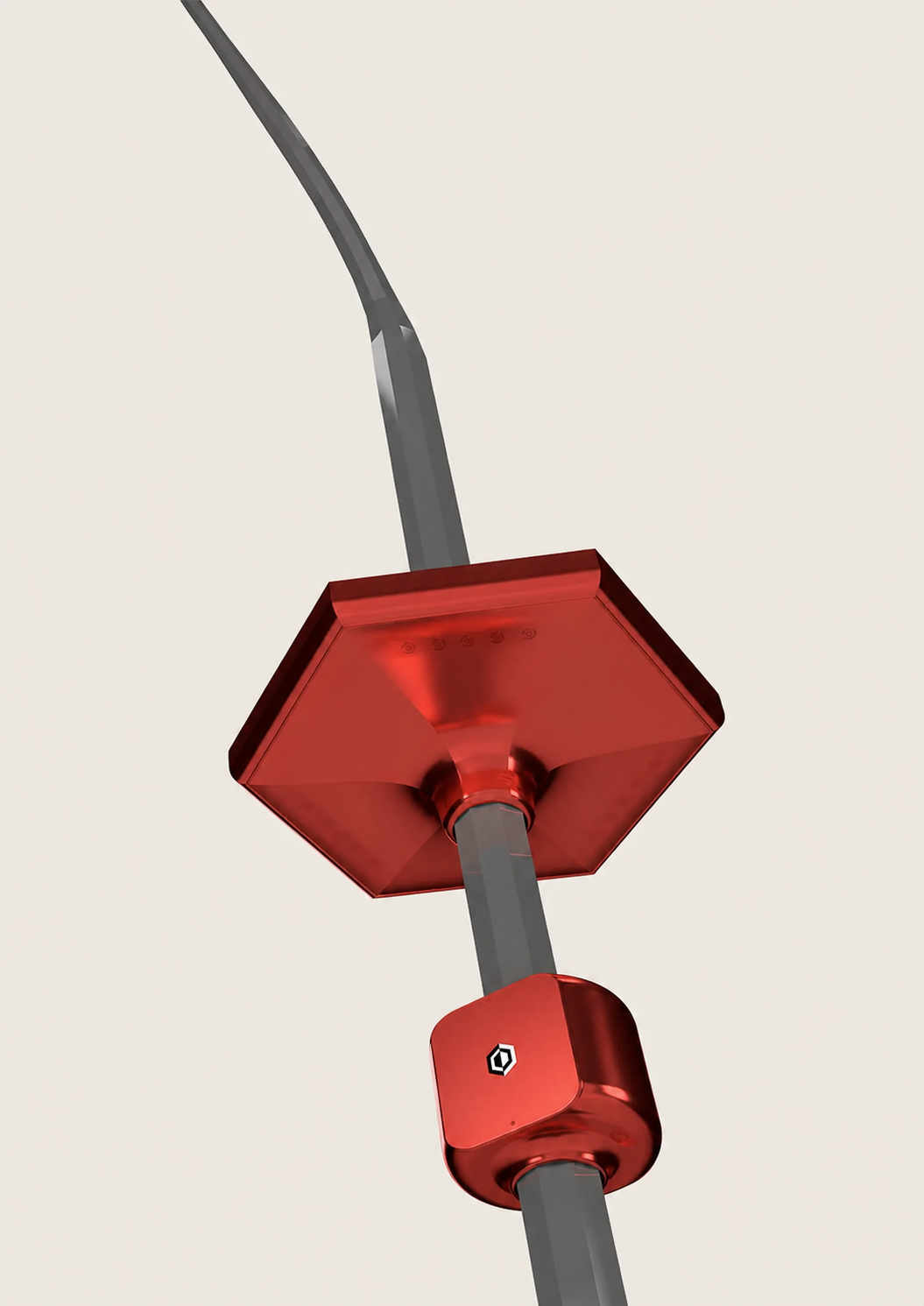
Evolution · 2019 · Hive
Street-mounted unit
The second iteration removed the platform and moved audio, lighting and smart access onto existing street infrastructure. The smaller footprint made the service easier to test in the city.
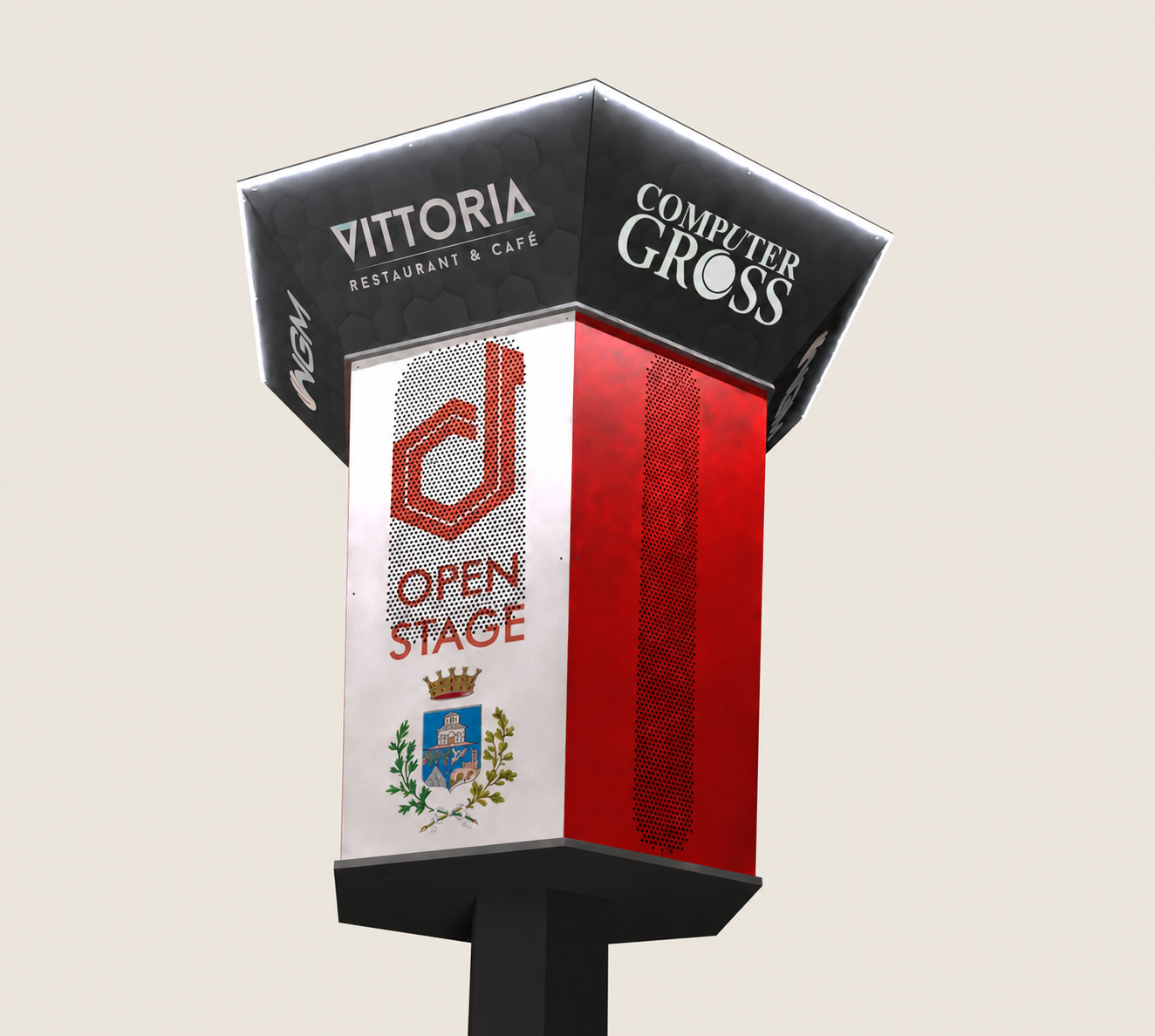
Evolution · 2020 · Open Stage
Self-standing station
The production model consolidated mixer, lights and professional audio into a self-standing, serviceable station that could be installed independently in public space.
Evolution · 2022 · Oasy
Slim movable station
Oasy slimmed down the station to reduce production costs and make it easier to move between locations. Municipalities could use it for both longer-term installations and temporary events.
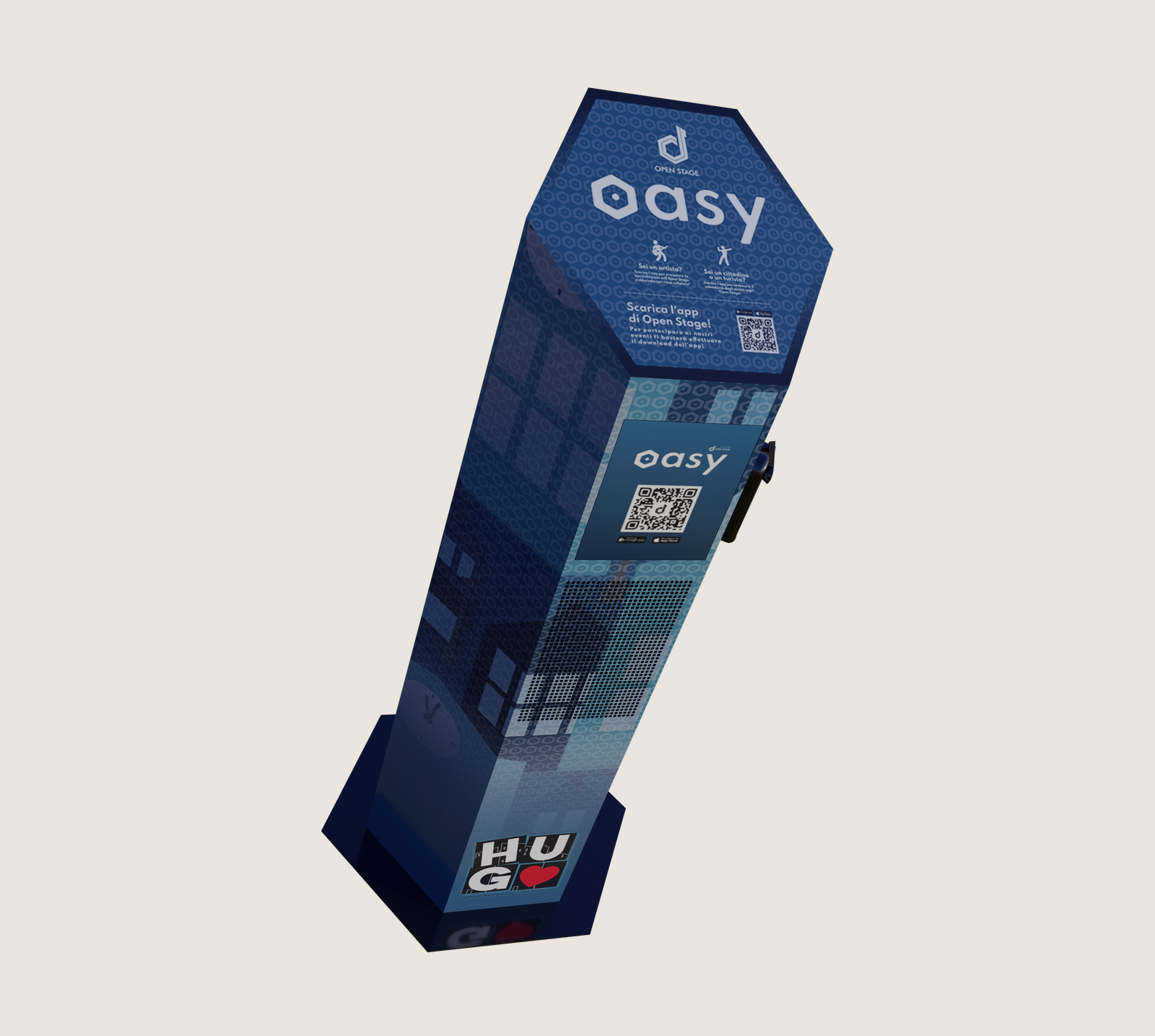
Text alternative: Four chronological product views: the 2018 hexagonal academic platform with canopy, the compact red Hive unit mounted to a streetlamp, the vertical red Open Stage station used for fixed installations, and the slim blue Oasy station designed to move between locations.
From prototype to public installations
Open Stage moved from a university concept to production and municipal installations. A station was installed in Pioltello in 2020 with the local council and a community foundation, followed by public programmes in Florence and Pisa.
The project also joined the Murate Idea Park accelerator, won a Comune di Milano public competition, passed Vodafone’s Action for 5G pre-selection, received NTT DATA’s 2020 special mention for social impact, and was among the six winners of Premio Impresa e Valore 2022.
Selected recognition

2019
Murate Idea Park
Accelerator · Startup incubation programme

2020
NTT DATA Open Innovation Contest 11
Recognition · Special mention for social impact

2022
Premio Impresa e Valore
Award · Winner
Installed in public space
FIG. OS.04
01
2020Milan
Municipal installation inaugurated with the local administration and community.

02
2021Florence
A performer using the service in an outdoor public-space programme.

03
2021Pisa
Temporary installation for Pisa Internet Festival, bringing the service into the city programme.

2020
Text alternative: Three documentary photographs: the Pioltello station inauguration in 2020 with the local administration and audience, a 2021 Florence performance beside an Open Stage installation, and the temporary station installed for Pisa Internet Festival in 2021.

Pisa Internet Festival
2022What the project changed in my practice
Open Stage taught me that product design extends beyond the interface. Decisions about access, hardware, maintenance and public-space rules shaped the business model, adoption and the experience in the square. That systems perspective still guides how I approach complex products today.


